Paper
Empowerment as a Strategy to Curb Deforestation and Promote Forest Rehabilitation
Fathul Irsyad, M. Roddini, Eki Riwanto
Indonesian Conservation Community (KKI) Warsi
I. INTRODUCTION
A. Background
The province of Bengkulu covers an area of approximately 19,919 km², with around 46% of its territory consisting of forest areas spread across the Bukit Barisan mountain range. Of the total forest area, 50.07% is conservation area such as Kerinci Seblat National Park (TNKS), 27.12% is protected forest, and the rest is production forest, limited production forest, and convertible production forest. Various challenges still exist in terms of forest and natural resource management in Bengkulu, ranging from tenure conflicts, illegal logging, land conversion, to the limited capacity of the community to manage natural resources sustainably. Forests play a crucial role in preserving ecosystems, storing carbon, and sustaining community livelihoods in ecological, social, and economic terms.
In this context, the concept of social forestry has become an alternative approach to sustainable forest management. Social forestry aims to provide communities with legal access to manage forest areas, while improving their welfare without sacrificing ecological functions. There are five types of schemes, namely Village Forests (HD), Community Forests (HKm), Community Plantation Forests (HTR), Customary Forests (HA), and Forestry Partnerships (KK).
Legal access granted through social forestry is often misinterpreted by communities as ownership rights rather than management rights. As a result, communities often clear and convert forest areas for plantations and agriculture as soon as they obtain social forestry permits. This happens because, at the outset, the concept of social forestry was not fully socialized to the entire community, especially those who depend on the forest for their livelihoods. Also, the process of proposing social forestry programs was not carried out in a participatory manner and did not proceed as it should have. The main obstacles in implementing social forestry in accordance with its concept include the lack of intensive post-permit assistance from the government and NGOs to the communities/groups holding the permits, the weak capacity of the community in protecting and managing the area, and the lack of economic value added from non-timber forest products (NTFPs), with reliance only on raw or semi-finished forest commodities and the suboptimal potential of environmental services.
It should be noted that intensive community empowerment is a key aspect that must be carried out collectively. Empowerment is not only interpreted as technical skills training, but also includes institutional strengthening, increasing understanding of regulations, sustainable forest area management, and support for the development of forest-based businesses that can have economic value. The empowerment approach for communities—in this case, social forestry permit holders—needs to be designed in a participatory, contextual, and needs-based manner. According to Chamber (in Waskhito and Amin, 2022), the bottom-up paradigm centered on the people continues to gain ground as a strategy for community empowerment, public service delivery, environmental conservation efforts, and natural resource management that can be applied in the field.
Every intervention carried out through empowerment must consider the social, cultural, economic, and ecological context of each community being assisted. Thus, the social forestry program should not only be an administrative program, but must become a socio-ecological transformation movement rooted in strengthening communities at the grassroots level. In an effort to curb deforestation in the Lemo Nakai forest area, KKI Warsi collaborated with various parties to carry out intensive empowerment activities in Batu Raja R Village, North Bengkulu Regency. This empowerment was carried out to develop potential—both natural and human resources—in encouraging the community to reestablish the relationship between forests and humans.
Meanwhile, in relation to the continued clearing of land in forest areas, one of the efforts being promoted is through Forest and Land Rehabilitation (RHL) activities. This program is one of the Indonesian government’s efforts to address the widespread damage and degradation of forests and critical land. Therefore, it aims to restore the ecological function and productivity of the land through tree planting activities in degraded areas. However, in its implementation, this program faces various challenges such as limited human resources at the field level, suitability of plant species, and suboptimal monitoring.
In Air Tenam Village, Ulu Manna District, South Bengkulu Regency, the majority of the community are farmers who utilize natural resources—forests—for agriculture and plantations. The process of utilizing forest areas begins with manually clearing the land using simple tools such as machetes, axes, and hoes. The cleared land is unclaimed wilderness. The extent of one’s ability to clear the forest determines the size of the land they own. The cleared forest is then converted into agricultural land as a source of livelihood and settlement (Anggraini, 2023). When the cleared land is no longer productive, the community—especially farmers—tend to clear new land in other locations, rather than reusing the old land or waiting for the harvest of annual crops such as durian, jengkol, and the like. As a result, some of the forest areas that were later proposed and obtained social forestry permits, particularly through the Community Forest (HKm) and People’s Plantation Forest (HTR) schemes, were essentially already cleared in terms of land cover.
Learning from the rehabilitation program carried out by the government, KKI Warsi, together with its partners, developed a forest rehabilitation action in Air Tenam Village through the baby tree program. This action was carried out by strengthening community involvement and commitment in planting, discussing plant types with the community, and conducting regular and participatory monitoring using an Android-based application. The success of the assistance program carried out by KKI Warsi in the two villages cannot be separated from the collaborative role of multiple stakeholders, such as civil society, government, academics, the private sector, and the media.
Therefore, the empowerment carried out in the Social Forestry Group (KPS) with the village forest scheme in Batu Raja R Village focuses on empowerment by maximizing existing potential and resources. Meanwhile, performance-based and/or evidence-based empowerment is a concept implemented together with cooperative groups that manage the Community Plantation Forest (HTR) and Community Forest (HKm) schemes in Air Tenam Village.
B. Problem Formulation
The problem formulation in this paper includes:
- How has empowerment succeeded in strengthening the community’s relationship with the forest and been able to curb deforestation in the Batu Raja R village forest?
- How does the mechanism of land and forest rehabilitation through the baby tree program in Air Tenam Village work?
C. Purpose of Writing
This paper aims to summarize the good practices carried out by KKI Warsi in empowering and developing programs in communities living in and around forests, particularly in Bengkulu Province. This is in the context of KKI WARSI’s planned visit to Europe, which includes policy dialogues, communication campaigns, and meetings with international stakeholders. This paper, which contains lessons learned, will play an important role in demonstrating how a grassroots approach can strengthen climate justice, inclusive forest governance, and community-oriented funding models.
II. DISCUSSION
Community empowerment is an important foundation for sustainable development, especially in areas that are highly dependent on natural resources, such as forest areas. In this context, empowerment is not just about providing assistance or facilities. Referring to the definition by Jim Ife & Tesoriero (2016), community empowerment is providing resources, opportunities, knowledge, and skills to communities to improve their ability to determine their own future and participate in efforts to influence the lives of their groups. Therefore, empowerment is also one of the keys to creating harmony between the economic needs of the community and forest conservation by maximizing the potential of existing resources in the village.
The concept of empowerment developed by KKI Warsi focuses on efforts to provide autonomy, authority, and trust to each individual in an organization, as well as encouraging them to be creative in order to complete their tasks as well as possible. This group-based approach is applied because individual empowerment alone makes it difficult for poor communities to address the problems they face. Also, the scope of assistance becomes too broad if it is handled individually. This group approach is most effective and, in terms of resource use, more efficient.
The empowerment stages begin with enabling, which is the first step in creating an environment or conditions that support the development of community potential. This shows that every community has potential that can be developed and does not mean that it has no power at all. The second stage is through the process of empowering, which focuses on providing access and strengthening the potential and capabilities of the community. The final stage is called protecting, which involves protecting interests by developing a protection system for the community that is the subject of development. Thus, empowerment is a process of building strength by encouraging, motivating, and raising community awareness of their potential, then helping them to develop it and protect what has been developed together.
A. Halting Deforestation in Batu Raja R Village
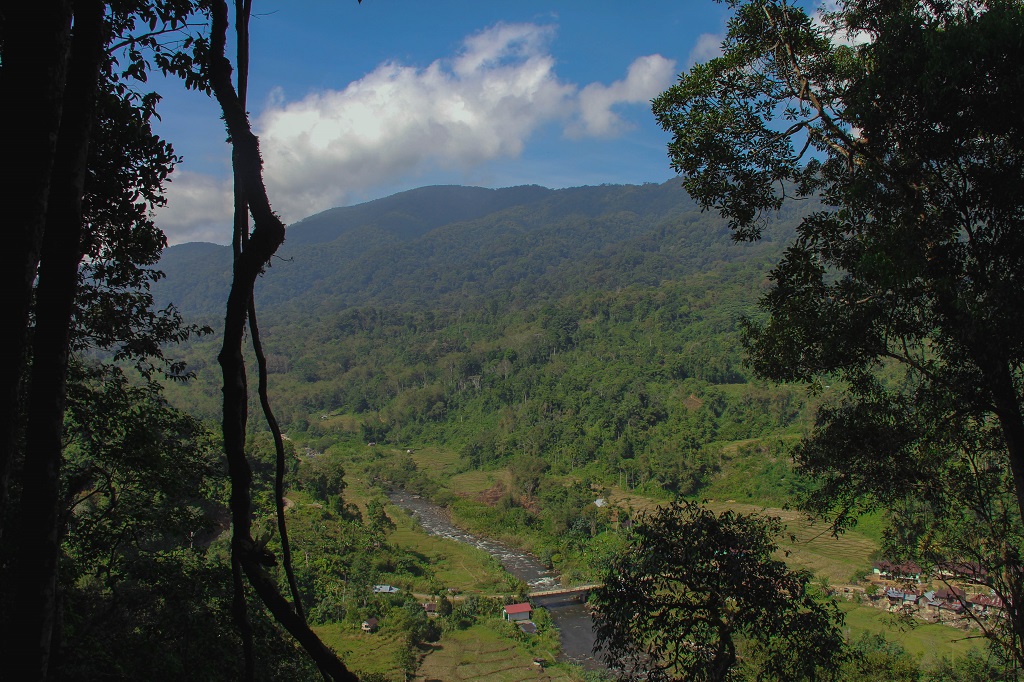
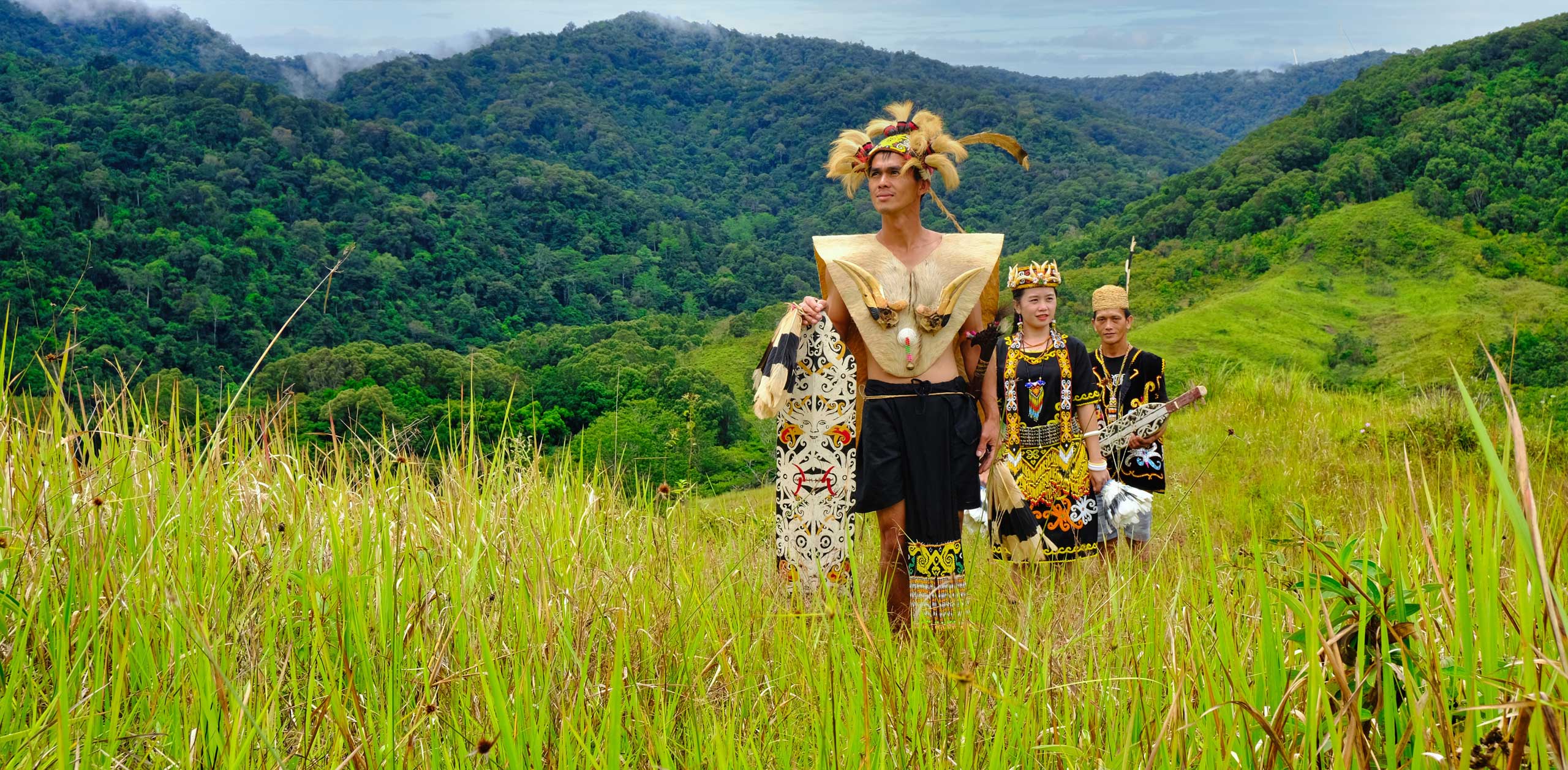
Batu Raja R Village is located in Hulu Palik Subdistrict, North Bengkulu Regency, Bengkulu Province. The majority of the village’s population are indigenous Rejang people. However, there are also a small number of people from Curup, Kepahiang, Java, and South Sumatra. Based on the profile data of Batu Raja R Village, the village covers an area of approximately 3,626.3 hectares, 70% of which is forest and hills, while around 30% is used for rice fields and settlements. The land categorization understood by the village community is for forest areas, rice fields, plantations, dry land, yards, public facilities, and settlements. The forest area of Batu Raja R Village, known as the Lemo Nakai forest area, which means five river streams, is a primary forest area in the village. Based on the results of a biodiversity survey conducted by KKI Warsi (2023) in the Lemo Nakai Village Forest area, it has the potential for biodiversity, wildlife, timber, non-timber forest products, and environmental services with land cover that still has high carbon absorption.
The empowerment carried out in Batu Raja R Village has strengthened the community in maximizing their natural resource potential by conducting a series of awareness-raising, capacity building, and joint decision-making activities. Thus, in the context of social forestry, empowerment is then viewed from the three pillars of forest and natural resource management principles that focus on area management, institutional management, and business management. Another pillar that is considered important to maximize these three pillars is multi-stakeholder collaboration. This pillar seeks to encourage collaboration and synergy among stakeholders to support sustainable natural resource management, while also providing an opportunity for joint campaigns.
KKI Warsi collaborated with KPHL Bukit Daun to introduce the idea of a tree fostering program (a form of environmental service compensation) involving the Lemo Nakai Village Forest Management Institution (LPHD). At that time, the tree fostering program became the entry point for post-permit activities in Batu Raja R Village, before intensive assistance activities were carried out. The tree fostering initiative was promoted as an innovation to rebuild the direct relationship between people and forests. The goal of this effort was to change the community’s understanding that economic benefits could be obtained without having to cut down trees in forest areas. Previously, tree felling was considered the only way to meet economic needs and was the main source of income for communities living near forests. This constant economic pressure has shifted wise forest management practices and damaged the harmonious relationship between humans and nature. Therefore, through intensive assistance, it has been possible to shift the community’s perception of forests as not only timber, but also as having many other potentials that can be developed into products of economic value.
1. Area Management: Optimizing Forest Management
The forest area of Lemo Nakai Village, Batu Raja R Village, faces threats from illegal logging and land conversion for agriculture by the local community. According to data compiled by the Bengkulu Province Environment and Forestry Agency, forest area damage in 2018 reached ±19,027 ha, most of which occurred in the Bukit Daun protected forest area, amounting to ±6,161 ha. The extent of forest damage was caused by forest encroachment and illegal logging. This situation worsened in 2016, during the transition of forest management authority from the district government to the provincial government, which led to weak supervision at the field level.
Table 1: Changes in Lemo Nakai Forest Cover from 2017 to 2025
| Year | Forest Cover |
| 2017 | 1022.60 |
| 2018 | 990.88 |
| 2019 | 970.2 |
| 2020 | 957.89 |
| 2021 | 953 |
| 2022 | 946.16 |
| 2023 | 938.94 |
| 2024 | 938.79 |
| 2025 | 913.04 |
Source: Analysis Results by KKI Warsi/Muhammad Nur Alif (2025)
To overcome these problems, efforts to organize the area are important. The organization and/or management of the area emphasizes the importance of spatial management and forest function allocation in accordance with its ecological and social characteristics. This includes the protection of protected areas, the preservation of biodiversity, and the control of land use change so that it remains in line with the carrying capacity and capacity of the environment. The main objective is to provide legal access to management for the community while remaining in line with the principles of environmental conservation.
As part of these efforts, KKI Warsi, through the REDD+ program, collaborates with and provides support to several FMUs in Bengkulu Province, including the Bukit Daun FMU ([1] ) to promote the recognition of forest management rights through social forestry. Through this collaboration, in 2017, the Minister of Environment and Forestry of the Republic of Indonesia issued Decree No. 4397/MENLHK-PSKL/PKPS/PSL.0/8/2017 on the Granting of Village Forest Management Rights to the Lemo Nakai Village Forest Management Institution covering an area of approximately 1,000 (one thousand) hectares in a protected forest area within the administrative area of Batu Raja R Village, Hulu Palik District, North Bengkulu Regency, Bengkulu Province.
However, new challenges arose after the social forestry permit was issued. Some members of the community believed that this social forestry permit gave them full rights and that they could do anything in the forest area, including clearing land. This was exacerbated by the lack of optimal post-permit assistance, so that illegal activities continued in the Lemo Nakai forest area. In response to this, in 2021 KKI Warsi, together with KPHL Bukit Daun, held discussions on social forestry permits in the Bukit Daun area, which has potential and opportunities but has not yet received intensive assistance. The discussion produced input to strengthen assistance, considering that the village has high biodiversity potential, significant economic dependence of the community on forests, and the absence of sustainable forest management and institutional capacity building in Batu Raja R Village.
Map 1: Changes in Forest Cover in Lemo Nakai from 2017 to 2025

Analysis Results by KKI Warsi/Muhammad Nur Alif
Source: Analysis Results by KKI Warsi/Muhammad Nur Alif (2025)
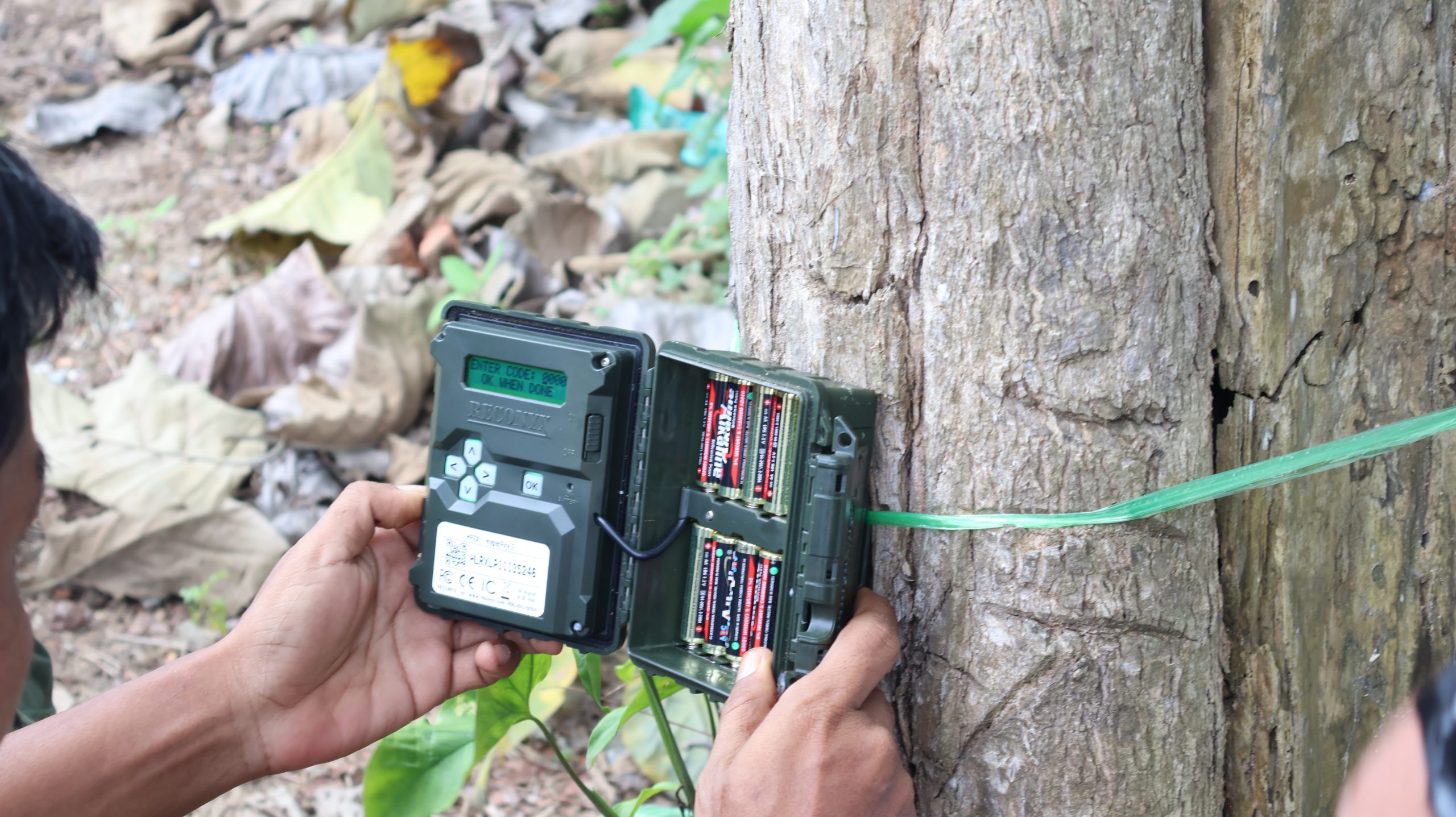
As a follow-up, KKI Warsi, with funding support from Uniqlo through the tree adoption program[2] , carried out various activities to strengthen forest area management in Lemo Nakai. The implementation of activities began with the installation of camera traps and carbon stock measurements to inventory biodiversity and calculate the carbon storage value in the forest area. The data obtained was analyzed and used as a basis for developing strategies for the protection and utilization of the area.[3] Next, periodic forest monitoring and patrol activities were carried out involving LPHD members and the community. These activities provided LPHD with the necessary information to develop a Social Forestry Management Plan (RKPS). Referring to Minister of Environment and Forestry Regulation No. 9 of 2021 concerning Social Forestry Management, permit management groups need to mark area boundaries, determine work areas, and define the functions of areas that must be maintained in accordance with the principle of sustainability. This zoning arrangement provides the basis for communities to manage forests legally while maintaining their ecological functions.
2. Institutional Governance: Enhancing the Role and Capacity of the Community
In the context of institutional governance, this principle or pillar plays a central role in ensuring the successful management of forest areas by communities in a fair, sustainable, and equitable manner. Community institutions, such as Social Forestry Groups in this case, Village Forest Management Institutions (LPHD) and Social Forestry Business Groups (KUPS), are the main actors that have legal access to state forest areas. However, the existence of these institutions does not necessarily guarantee effective management without a structured process of formation and strengthening. Therefore, strategies to strengthen institutional governance need to start from the stages of formation, capacity building, to achieving group independence, with intensive and continuous support. Intensive support is key to encouraging institutions to function properly in order to strengthen community organizations involved in the management of social forestry permit areas.
This assistance is a process that cannot be done instantly, as it covers various important aspects such as organizational structure, division of tasks and functions, internal group strengthening, and human resource capacity building. The main objective is to create community institutions capable of managing forest areas and developing social forestry businesses independently. To that end, the assistance provided is comprehensive, starting from identifying the potential and challenges of the group, developing an institutional work plan, to facilitating the preparation of legal and administrative documents. Without adequate assistance, institutions are prone to stagnation or internal conflicts that hinder the area management process and business development.
The implementation of institutional governance carried out at LPHD Lemo Nakai in the process of institutional strengthening involved reflection and restructuring of the LPHD, including a review of the management structure and membership of the LPHD to make it more representative and functional. This process is important for building an organization that is inclusive and responsive to the needs of the communities surrounding the forest. Furthermore, institutional capacity building was carried out through technical training related to the duties and functions of each management member, both at the LPHD and KUPS levels. This training covered aspects of administration, organizational management, and understanding of applicable social forestry regulations.
In addition, capacity building includes training on preparing Social Forestry Management Plans (RKPS), enabling groups to develop planning documents based on resource potential and community needsm. The RKPS is an important document for institutions to determine the direction and strategy for sustainable management, ranging from area management, institutions, and business development in accordance with the social and ecological conditions in the village. In addition to planning, participatory forest ecosystem monitoring (PATEN PARTI) activities are also carried out as part of area security efforts. Through this training, the community is empowered to conduct routine patrols and record forest conditions, thereby preventing damage and preserving the ecological functions of the village forest area.
Overall, the institutional governance practices carried out at LPHD Lemo Nakai show that institutional strengthening does not only focus on formal structures, but also on the process of empowering the community as a whole. Institutional success is highly dependent on the quality of assistance, active participation of group members, and the suitability of planning to the local context. This not only enables the group to manage the forest legally, but also becomes a major driver in realizing community welfare and environmental conservation simultaneously.
3. Business Governance: Maximizing the Potential of Lemo Nakai
Business governance focuses on developing a sustainable forest-based economy through the utilization of timber and non-timber forest products, environmental services, and ecotourism. This business management must be in accordance with the principles of sustainability and environmental friendliness. This certainly involves the development and strengthening of community business capacity. The goal is to achieve economic equality and improve community welfare through profitable businesses that still pay attention to environmental sustainability.
Activities related to business management began with identifying the potential of natural resources in forest areas to generate direct economic benefits, followed by capacity building for village communities through technical training in coffee cultivation, rattan and bamboo crafts and other non-timber forest products, and ecoprinting. In addition, training is provided on post-harvest techniques and coffee production, and capacity building for the Coffee KUPS, Handicraft KUPS, Ecoprint KUPS, and Tourism KUPS by organizing and forming groups, managing group legality, providing assistance in implementing the training received, production practices, and participation in local events. identifying problems/constraints and strategies for resolution in the four KUPS.
Meanwhile, business management is an important aspect aimed at building a sustainable forest-based community economy. The main principle in managing this business is the utilization of forest resources, both timber and non-timber forest products (NTFPs), environmental services, and ecotourism potential, while maintaining the ecological sustainability of the area and based on local potential. Therefore, business management is not only about building economic units, but also about strengthening community capacity, organizing business groups, and involving more people (inclusiveness).
Efforts to develop business management in the Lemo Nakai Village Forest area began with the identification of natural resource potentials that could be economically utilized by the community. The results of this identification became the basis for formulating business development plans relevant to local conditions, in terms of raw material availability, community skills, and market access. This potential includes commodities such as coffee, rattan, bamboo, and other non-timber forest products, as well as the potential for developing handicrafts and ecotourism. In order for this potential to be transformed into a sustainable source of livelihood, a series of technical training sessions were conducted for the community, including training in coffee cultivation, rattan and bamboo handicrafts, ecoprint products, and post-harvest processing.
These training activities were designed as part of a systematic approach to strengthen Social Forestry Business Groups (KUPS). In this context, four KUPS were formed, namely KUPS Coffee, KUPS Crafts, KUPS Ecoprint, and KUPS Tourism. The business development has had a positive impact on the community and on alternative sources of income in Batu Raja R Village. The products developed have become regional specialties that are a source of pride, particularly for the people of Batu Raja R Village and the people of North Bengkulu Regency in general. Some of the products developed include:
- KUPS Kopi Sako Lemo Nakai with coffee products that have the distinctive taste of robusta coffee processed from high-quality coffee beans. This coffee comes from coffee agroforestry in the Lemo Nakai forest area and is managed by farmers who understand the importance of forest and ecosystem sustainability. Currently, the coffee products available are premium quality (in powder and roast bean form) and economical (in powder form).
- KUPS Besambu Lemo Nakai produces Non-Timber Forest Products (NTFP) crafts using raw materials sourced from nature that were once considered weeds or pests, but can now be turned into high-value works of art and everyday items, such as hats, bags, and other products. These products are not only commodities but also symbols of a sustainable culture.
- KUPS Ecoprint Dawen Lemo Nakai is an environmentally friendly product made from natural materials, namely local Lemo Nakai leaves that have certain characteristics. Currently, ecoprint products are available in various forms such as bags, clothing, pouches, hijabs, pillowcases, and others.
- KUPS Aroba Lemo Nakai Ecotourism offers beautiful natural scenery with abundant biodiversity. Currently, the available tourist destinations are water tubing and waterfall tours.
The KUPS strengthening process is carried out through group organization activities, institutional legality management, and intensive assistance in applying the knowledge gained from training. The community is actively involved in production practices, from processing to packaging, and is encouraged to participate in various local promotional events to expand their network and market access.
In addition to technical activities, problems and obstacles faced by each KUPS were also identified. These included obstacles in production, financial management, equipment limitations, and group management issues. Based on this identification, solutions were formulated according to the conditions of each KUPS. The assistance was aimed not only at solving technical problems, but also at building the long-term independence of the groups, including in terms of business planning, yield management, and collaboration with external parties. With this approach, business governance in social forestry not only generates economic benefits, but also strengthens the social and institutional structures of village communities.
Thus, the business governance applied in the Lemo Nakai Village Forest is an example of good practice in promoting forest-based community economic transformation. A comprehensive approach—from identifying potential, increasing capacity, strengthening institutions, to marketing strategies—shows that the development of social forestry businesses can be a strategic instrument for achieving simultaneous improvements in welfare and environmental conservation.
4. Multi-Stakeholder Collaboration: Bottom-Up Development Efforts
Starting from activities carried out together with the community in Batu Raja R Village, KKI Warsi then built collaborations with various parties such as universities and the North Bengkulu Regency government. Bengkulu University (UNIB) was interested in the rich biodiversity in Lemo Nakai. This led to an MoU between KKI Warsi and the Faculty of Agriculture at UNIB on Synergy and Implementation of the Three Pillars of Higher Education in the Context of Sustainable Management and Utilization of Natural Resources and Forests. The UNIB Department of Soil Science conducted student field activities on ecology and biodiversity in Batu Raja R Village, including land surveys and mapping, soil and water quality analysis, measurement of discharge and sedimentation in the Lemo Nakai watershed, and criteria for evaluating land suitability, including soil texture, soil structure, and soil permeability, as well as laboratory tests on soil pH, soil texture, and physical properties. In addition, with the Faculty of Law of UNIB, KKI Warsi promoted an MoU on Strengthening Institutions and Implementing the Tridharma of Higher Education. From this MoU, there were activities to improve the main duties and functions of village officials to produce village regulations on natural resource management and others, assisted by academics from UNIB.
Meanwhile, collaboration with the North Bengkulu regency government began with a hearing with the Regional Apparatus Organization (OPD) regarding social forestry and tree fostering programs. As a result, in 2023, a circular letter was issued by the regional leadership to all OPDs regarding the invitation to foster trees in the Lemo Nakai forest area of Batu Raja R Village. The collaboration was further strengthened by the signing of an MoU in 2024 on Low-Emission Development through Collaborative and Sustainable Natural Resource Management in North Bengkulu Regency.
The MoU was then formalized into a Cooperation Agreement (PKS) and work plan in 2025. This Cooperation Agreement covers integrated area development (IAD) based on social forestry and planning towards the implementation of nationally determined contributions (NDC) in addressing climate change in North Bengkulu Regency. IAD is intended as an opportunity for district governments to support programs in forest areas through social forestry. This cooperation will be used as a space for program collaboration between parties, especially in each OPD in the district. This multi-stakeholder collaboration is encouraged to strengthen initiatives at the community level in rebuilding direct relationships between forest areas and communities.
Intensive empowerment in Batu Raja R Village has succeeded in changing the community’s understanding of building direct relationships with forest areas through forest patrol and protection activities. On the other hand, through business development, community groups not only protect the forest but also reap direct economic benefits. With a series of empowerment and collaboration opportunities that have been well established in the community, this can become a learning experience that is then supported by programs from the district government. The hope is that this can strengthen sustainable forest protection and also provide prosperity for the community.
B. Forest Rehabilitation Action Through the Baby Tree Program
Air Tenam Village is one of the villages located in Ulu Manna District, South Bengkulu Regency, Bengkulu Province. The area of Air Tenam Village is approximately 3,187 ha. Based on a study conducted by Anggraini (2022), the residents of Air Tenam Village come from different areas, with most of them being migrants from South Sumatra and Ulu Manna. Meanwhile, the indigenous people of Air Tenam Village are the Serawai tribe. The Serawai tribe is rarely found in Air Tenam Village, and currently, there are only two families of the Serawai tribe living in Air Tenam Village. Air Tenam Village has a population of 180 people consisting of 50 households. The main livelihood of the people of Air Tenam Village is farming. Almost all of the people of Air Tenam Village work as farmers, either as their main profession or as a side job. However, the people of Air Tenam Village basically support their livelihoods from agricultural products.
Air Tenam Village has a social forestry permit with two schemes, namely the Community Plantation Forest (HTR) scheme issued in 2013 and the Community Forest (HKm) scheme in 2019. The community utilizes the HKM and HTR permits as agricultural land. Most of the forest area in Air Tenam Village has been cleared, and it can be said that only a small area of primary forest remains. This area is a buffer zone for the Raja Mandara protected forest, which still has good land cover and potential biodiversity. Therefore, rehabilitation efforts in the Air Tenam forest are important to ensure that they do not encroach on the protected forest.
1. Performance-Based Forest Rehabilitation Action
In 2021, KKI Warsi established a collaboration with BPDAS Ketahun, together with KPHL Bengkulu Selatan. This coordination was to discuss the condition of the forest in Air Tenam Village, which had already suffered deforestation and degradation, in order to obtain a Community Nursery program on unproductive land.[4] Support was provided in the form of funds to the community, which were used to build nurseries, purchase seedlings, and carry out seedling cultivation and planting. At the same time, KKI Warsi developed and obtained support from the Darwin Initiative through the program Strengthening community capacity for evidence-based forest restoration in Indonesia, with a consortium team consisting of the United Kingdom – Centre for Ecology and Hydrology (UK – CEH) as the lead consortium, the University of Kent, Plan Vivo, BRIN, KKI Warsi and FFI.
Forest and land rehabilitation programs have often been top-down, focusing only on physical planting targets and lacking meaningful community involvement in planning, implementation, or monitoring. In fact, the long-term success of these programs is highly dependent on the active involvement of the communities surrounding the forests, who interact directly with the land and natural resources on a daily basis. The application of community empowerment in forest rehabilitation programs needs to shift from an activity-based approach to a performance-based and/or evidence-based approach. One concrete form of this approach is to provide financial incentives to communities based on the success of the plants they grow, not just on the number of seedlings planted.
KKI Warsi and its partners developed this mechanism in Air Tenam Village, emphasizing performance-based and evidence-based empowermen. This approach focuses on results and work achievements, concentrates on the attainment of performance indicators, such as increased income, productivity, or skills, has a structured monitoring and evaluation system to assess the success of empowerment programs, and promotes accountability and efficiency in the use of resources. This is done because the individuals who then carry out these rehabilitation actions are part of the HKm and HTR groups, which have previously been educated on the empowerment and assistance activities carried out by KKI Warsi in previous years. The rehabilitation actions carried out through this collaborative program developed an environmental payment for services (PES) model for rehabilitation carried out by communities based on performance and/or evidence, thus requiring a measurable monitoring process, which was then called the baby tree program. KKI Warsi believed that the community should be able to receive environmental payments for services if they successfully carried out rehabilitation actions through this planting.
Table 2: Land Area of HTR and HKM Group Members
| No | Name | Area (ha) |
| 1 | Agus | 1.48 |
| 2 | Aji | 0.28 |
| 3 | Andika 1 | 0.51 |
| 4 | Andika 2 | 1.35 |
| 5 | Apriansyah | 1.04 |
| 6 | Ardi | 1.13 |
| 7 | Arlisun | 2.03 |
| 8 | Arlius | 2.29 |
| 9 | Bakran 1 | 0.88 |
| 10 | Bakran 2 | 0.27 |
| 11 | Bakran 3 | 0.73 |
| 12 | Bambang | 4.81 |
| 13 | Stock Exchange 1 | 1.56 |
| 14 | Exchange 2 | 1.72 |
| 15 | Carles | 0.43 |
| 16 | Diko | 0.77 |
| 17 | Ekowan | 1.13 |
| 18 | Juini | 1.77 |
| 19 | Lasiem | 1.18 |
| 20 | Miki | 0.6 |
| 21 | Miprin | 2.87 |
| 22 | Nasiun | 0.71 |
| 23 | Pansen | 0.54 |
| 24 | Rizky / Anggi | 0.92 |
| 25 | Safri | 1.44 |
| 26 | Sarno 1 | 1.5 |
| 27 | Sarno 2 | 1.34 |
| 28 | Sudio | 1.32 |
| 29 | Wandi | 0.42 |
| 30 | Wansa | 5.21 |
| 31 | Yupri | 0.57 |
| Total | 42.8 | |
Source: Results of KKI Warsi/Nopal Adrila aerial mapping (2023)
To ensure that this performance-based and/or evidence-based empowerment approach is effective, a number of important principles are required. First, success indicators must be clearly and measurably defined, namely the survival rate of plants. KKI Warsi has established a system whereby environmental service incentives are not provided at the outset, but only when farmers can prove a survival rate of 80% or above at each monitoring stage.
Map 2: Map of HTR and HKM Group Members’ Land Parcels

Map of HTR and HKM Group Members’ Land Parcels
Source: KKI Warsi/Nopal Adrila Aerial Mapping Results (2023)
Second, payments must be conditional, i.e., only given after the expected results have been proven to have been achieved through a transparent verification mechanism. These incentive funds are not given all at the beginning as in general rehabilitation programs, but rather performance-based rewards and/or evidence are divided into four stages, namely in year 0, which is the baseline for planting at Rp. 20,000/tree, year 1 at Rp. 15,000/tree, year 2 at Rp. 15,000/tree, and year 3 at Rp. 20,000/tree. This process also provides an opportunity for monitoring by the community and mutual awareness of the amounts received.
Third, the incentive scheme needs to be designed in a fair and inclusive manner so that the benefits are felt by all community groups that make a real contribution, and do not cause inequality or social conflict. This then becomes a guideline that individuals who receive and carry out this rehabilitation action are committed to planting on their own open and degraded land. Controls are carried out to ensure that the criteria for degraded land are met by mapping the land parcels using aerial photography with drones. This is done to ensure that the land to be planted is indeed unproductive land (not land that has been deliberately cleared for this program).
To ensure long-term sustainability, it is important to build trust, communication between community groups, and local capacity in natural resource management. Therefore, at the beginning of the program, initial socialization was carried out on monitoring mechanisms, rights and obligations. The rehabilitation program was intended for members of the HTR and HKm groups. The community was given initial socialization on monitoring mechanisms, rights and obligations. The target audience was people who had been educated and assisted at the beginning together with KKI Warsi. However, not all members were able to commit to planting on their degraded land and to a survival rate commitment of above 80%. Based on these indicators, only 26 people agreed. This agreement was reinforced with a memorandum of cooperation, and the number of plants was adjusted according to the capacity of each person who had committed. In addition, there was also a commitment to monitor tree height, diameter, and plant health. The selection of plants was made in accordance with the results of discussions with the community based on their needs and commitments, resulting in an agreement on areca nut, durian, and jengkol seedlings.
Fourth, the monitoring and evaluation system used must be based on valid and mutually agreed data, and ideally involve the community in the process of measuring and reporting success.
2. Monitoring Mechanism to Ensure Survival Rate Data
The monitoring mechanism developed in the baby tree program uses two methods, the first being the monitoring mechanism carried out by the Jejakin system and the second being the mechanism from KKI Warsi.[5] Jejakin has a monitoring mechanism that conducts regular monitoring of all seedlings that have been planted. Monitoring is also carried out using a sampling method of 5% of the total number of seedlings planted by the community. The 5% sample plants will be marked with a barcode to be linked to an Android-based application for further information inventory, such as carbon stock estimates, photos, location, health conditions, height, diameter, etc.
Meanwhile, in the monitoring system developed by KKI Warsi, communities are required to monitor all their plants using geo-tagging (camera tagging). The monitoring team consists of KKI Warsi staff, group members, and land managers/owners. The process of involving groups aims to build community capacity so that they are able to carry out monitoring independently. The monitoring mechanism carried out in the baby tree program in Air Tenam Village is as follows:
- First Period (Year 0): This activity is carried out in the early phase of tree planting, where each community/land manager is responsible for photographing each of their plants accompanied by a comparison scale and using a geotagging application. This data is then inventoried by the facilitator/field assistant for further analysis. Unhealthy seedlings will be removed from this initial/baseline data. The total baseline plants in year 0 were 9,829 seedlings, with 1,176 durian, 721 jengkol, and 7,932 areca nut seedlings.
- Second Period (Year 1): Monitoring is conducted every 3 months; field facilitators and land managers will visit each plot of land to perform photo tagging on all plants (5% of samples using the Karlon application). The general condition of the land and plants will also be observed, such as whether the shrubs around the plants have been cleared and what diseases or pests are present. These findings will then be discussed specifically with each land manager. At the end of each program year (before the reward funds are disbursed), each land manager is required to conduct photo tagging of all their plants to ensure the survival rate. The plant data collected will only be from plants that have survived and are in relatively healthy condition. The total survival rate in the first year was 9,160 seedlings (93%[6] ), with 1,141 durian, 702 jengkol, and 7,317 areca nut seedlings.
- Third Period (Year 2): Monitoring was conducted every 6 months using the same mechanism as in the second period.
- Fourth Period (Year 3): Monitoring was conducted at the end of the year (month 12) using the same mechanism as before.
Three stages of disbursement have been carried out by KKI Warsi to the relevant farmers based on the survival rate of the crops they planted, starting sequentially from the first stage of disbursement in August 2023 amounting to IDR 194,340,000, the second stage of disbursement in March 2024 amounting to IDR 143,365,000, and the third disbursement in March 2025 amounting to IDR 137,520,000.
The success of this program was then noticed and studied by parties from the OPD on behalf of individual groups regarding the optimization of rehabilitation scenarios for the Forest and Land Rehabilitation (RHL) program by comparing it with the baby tree program. Referring to Andersson K, et al (2018), this mechanism (read: incentives) can be successful, partly because most forest users in developing countries have an economic interest in their interaction with forests. The number of rural people who depend on forests for their economic livelihoods is undeniably very large. They already have economic interests directly related to forest utilization, for example, from logging, collecting firewood, or other forest products, including incentives from rehabilitation actions. The majority of the Air Tenam Village community are farmers who are directly involved with and utilize their forest or garden areas as a source of income.
III. NCONCLUSION
A. Conclusion
The intensive empowerment activities carried out by KKI Warsi in Batu Raja R Village are considered successful in building awareness and understanding at the community level of the importance of protecting forest areas. The protection and security of the Lemo Nakai forest area, which is routinely carried out by the community through joint patrols with KPHL Bukit Daun, plays a very important role in curbing deforestation. On the other hand, economic improvement activities continue to be carried out as a solution so that the community does not solely rely on an economy that can damage the forest. Communities can utilize forests through coffee-based agroforestry systems, locally known as “mixed gardens.”
In addition, from the protection and inventory of the potential of the Lemo Nakai forest, the community has also been able to develop various types of businesses derived from the forest area. Initiating business development in the form of downstream products increases the value of forest commodities, thereby fostering an alternative economy in the community. Thus, through this assistance, the protection of sustainable forest areas can go hand in hand with the process of improving the welfare and livelihoods of the community. However, KKI Warsi feels that there are still limitations in terms of time for assistance, preparation of exit strategies, and the focus of activities on social forestry groups, namely LPHD and KUPS.
Meanwhile, regarding the baby tree program developed in Air Tenam Village, it is important to ensure that performance-based and/or evidence-based empowerment with incentives can encourage the success of the program. Some of these include building community relationships and commitment, ensuring plant survival rates, the need for special intervention to care for plants in the forest, grafting, building awareness that these plants provide ecological benefits and will be needed in the future as a source of income (MTPS), and conducting regular monitoring involving the community using technology. It is hoped that these incentives will increase the success of rehabilitation in growing new forests together. In addition, the payment of incentives will increase the motivation of forest users to take conservation actions, as most of the program recipients have livelihoods that depend on the forest.
B. Opportunities and Recommendations
There are several opportunities and recommendations that can be developed from the empowerment activities that have been carried out in two villages in Bengkulu Province, including:
- Intensive assistance can be used as a starting point to strengthen community understanding of sustainable forest management, which should be expanded by involving the active role of local communities.
- The potential for voluntary carbon trading is a strategic opportunity to appreciate the role of the community in protecting forests, so policies that legalize and support this scheme need to be encouraged.
- The Baby Tree program in Air Tenam Village provides an important baseline for monitoring forest rehabilitation and biodiversity, highlighting the need for a community-based long-term observation system.
- Collaboration between the government, NGOs, and the private sector opens up opportunities to strengthen forest area restoration, which can be optimized through the establishment of structured multi-stakeholder forums or partnerships.
References
Andersson, K., et al. 2018. Experimental evidence on payments for forest commons conservation. Nature sustainability Vol.1 page.128 – 135
Anggraini, Lili. 2022. Study of Welfare Levels and Socioeconomic Aspects of Air Tenam Village, Ulu Manna District, South Bengkulu. KKI Warsi, research report
________________. 2023. Patterns of Forest and Land Use by Farming Communities Around Forest Areas in South Bengkulu Regency (Case Study of 3 Villages in Ulu Manna District and 1 Village in Air Nipis District). KKI Warsi, research report
Daus, Rainal. Empowerment and Participation in Development. KKI Warsi, presentation
Ife, Jim & Tesoriero, Frank. 2016. Community Development: Community Development Alternatives in the Era of Globalization. Yogyakarta, Pustaka Pelajar.
Ladyfandela, Nindy. 2023. Survey of Biodiversity (Wildlife) Using Camera Traps in the Lemo Nakai Village Forest, North Bengkulu Regency, Bengkulu. KKI Warsi, research report
Waskhito, Nugroho and Amin. 2022. Empowerment of Communities Around the UMM KHDTK in Forest Conservation Through the Agroforestry System. BUDIMAS Journal, Vol. 04 No. 02
[1] At the beginning of the proposal process, it was initiated by the North Bengkulu Regency Government and KPHP North Bengkulu, then forwarded to KPHL Bukit Daun because the lemo nakai area is a protected forest.
[2] The tree adoption program developed in Batu Raja R Village, KKI Warsi was then able to establish a relationship with the private sector, namely Uniqlo. This relationship was established due to a campaign carried out by the Hutan Itu Indonesia (HII) institution, which is also a partner of KKI Warsi. Through the campaign that had been carried out, Uniqlo expressed interest in the tree adoption program. In the process of establishing this collaboration, KKI Warsi offered the idea of developing a forest adoption program. This means that it is not only trees that are adopted, but also the wider forest landscape. The forest adoption program focuses on carrying out activities related to the protection and management of natural resources. Through a process of encouraging the utilization of potential for business development, it aims to rebuild the relationship between nature and humans. The program runs from 2022 to 2024.
[3] Uniqlo facilitates carbon certification through the Plan Vivo Institute. This activity is carried out so that the initial biodiversity survey becomes a Project Idea Note (PIN) to reward the community for protecting the forest area by not logging. The PIN and Project Design Document (PDD) have been approved by Plan Vivo, and what has not been done yet is certification, verification, and validation by a third party. This has been delayed because regulations in Indonesia are still unclear regarding carbon trading.
[4] This collaborative process also resulted in a partnership with BPDAS, which supported the cultivation of 30,000 seedlings in Air Tenam Village. Only 9,829 of these seedlings were ultimately used to support the baby tree rehabilitation program.
[5] KKI Warsi sought support from other partners to maximize this program by holding discussions with partners from Hutan Itu Indonesia. As a result, they obtained support opportunities and established a collaboration with Jejakin. After coordinating with Jejakin, KKI Warsi collaborated with Jejakin to support environmental services through rehabilitation for people who plant trees at a value of IDR 70,000 per tree.
[6] The remaining results from the first year of monitoring amounted to 7%. The community decided to purchase 1,000 avocado seedlings to be given to the Air Tenam community, who farm in the HKm and HTR areas. Fortunately, there is no obligation to monitor these avocados, unlike the three types of trees in the program agreement and incentives. However, there are still communities that send photos of the avocado growth (independent monitoring).